
How Much Protein Is Needed For Muscle Growth?
Few topics in nutrition generate as much discussion as protein intake. In both scientific literature and public health guidelines, protein is recognized as an essential macronutrient required for tissue maintenance, enzymatic function, immune activity, and structural integrity of the human body. However, when the discussion shifts from basic survival requirements to optimal physiological performance, the question of how much protein humans actually need becomes far less straightforward.
For decades, nutritional recommendations for protein intake have been based primarily on the concept of nitrogen balance, which measures whether the body retains or loses nitrogen — a proxy for protein metabolism. From these studies emerged the widely accepted Recommended Dietary Allowance (RDA) of approximately 0.8 g of protein per kilogram of body weight per day for healthy adults. This level is designed to prevent deficiency and maintain basic physiological function in the majority of the population.
However, the RDA does not necessarily reflect the protein intake required to optimize muscle mass, strength, metabolic health, or physical performance. Skeletal muscle represents the largest component of lean body mass and plays a critical role not only in locomotion but also in metabolic regulation, glucose homeostasis, and long-term health. Reductions in muscle mass and function have been associated with increased risk of frailty, chronic disease, physical disability, and decreased quality of life.
As resistance training and physical fitness have become more widely adopted, a growing body of research has investigated whether higher protein intakes can enhance muscle growth and strength adaptations, particularly when combined with exercise. Many athletes and fitness professionals advocate protein intakes that are two to three times higher than the official RDA, often in the range of 1.6–2.2 g/kg/day. This discrepancy between public health guidelines and athletic recommendations has created a long-standing debate:
Is the current protein recommendation sufficient for optimal muscle health, or is higher intake necessary to maximize physiological adaptation?
Scientific studies examining this question have produced mixed results. Some investigations demonstrate modest increases in lean body mass and strength with higher protein intake, particularly when combined with resistance training. Others suggest that once a moderate level of protein intake is reached, additional protein produces only small or negligible benefits.
Understanding this issue requires looking beyond simple dietary recommendations and examining the biology of skeletal muscle, the mechanisms of protein metabolism, and the interaction between nutrition and exercise. Protein intake alone does not determine muscle growth; rather, it interacts with mechanical stimuli, hormonal signaling, and cellular pathways that regulate muscle protein synthesis.
This article aims to clarify the scientific evidence surrounding protein intake and muscle development by exploring three central questions:
How does dietary protein influence skeletal muscle physiology?
What does current research show about protein intake and muscle growth or strength?
What level of protein intake appears to be optimal for healthy individuals seeking to maintain or increase muscle mass?
By examining the underlying physiology and the findings of controlled scientific studies, we can move beyond simplified nutritional advice and develop a clearer understanding of the true role of protein in human performance and health.
Skeletal Muscle Biology
To understand the role of protein in muscle growth, it is important to first understand how skeletal muscle functions biologically. Muscle is not a static tissue that simply grows when protein is consumed. Instead, it is a highly dynamic system that constantly adapts to physical stress, nutrition, and metabolic demands.
Skeletal muscle makes up the largest component of lean body mass in the human body and plays a crucial role not only in movement but also in metabolic health. Beyond locomotion, muscle tissue contributes to glucose regulation, energy metabolism, and overall physical function. Loss of muscle mass and strength has been associated with reduced mobility, increased risk of chronic disease, and decreased quality of life.
Structure and Function of Skeletal Muscle
Skeletal muscles are composed of bundles of muscle fibers, which are specialized cells designed to generate force. Within these fibers are contractile proteins—primarily actin and myosin—organized into repeating units that allow muscles to contract.
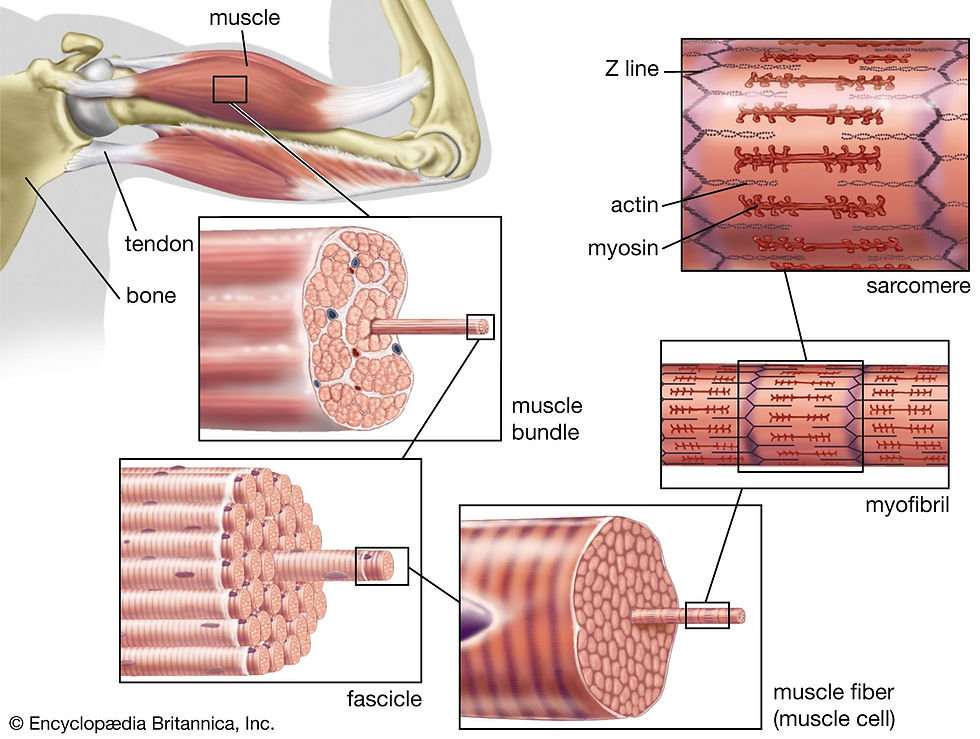
These fibers can adapt structurally in response to external stimuli. When exposed to repeated mechanical stress, such as resistance training, muscle fibers can increase their cross-sectional area, resulting in larger and stronger muscles. This process is known as muscle hypertrophy.
However, muscle growth does not occur simply because protein is consumed. Instead, it depends on the balance of ongoing biological processes within muscle tissue.
Muscle Protein Turnover
Muscle tissue is constantly undergoing a cycle of protein turnover, where old proteins are degraded and new proteins are synthesized. Two processes determine whether muscle mass increases or decreases:
Muscle Protein Synthesis (MPS) — the creation of new muscle proteins
Muscle Protein Breakdown (MPB) — the degradation of existing proteins
Muscle growth occurs when muscle protein synthesis exceeds muscle protein breakdown over time, creating a positive net protein balance. If the opposite occurs, muscle mass gradually declines.
Dietary protein supports this system by supplying the essential amino acids required for new protein synthesis, making adequate protein intake an important component of muscle maintenance and growth.
The Key Stimuli That Drive Muscle Adaptation
Although protein provides the raw materials for building muscle, it is not the primary driver of muscle growth. Muscle adaptation is regulated by three major stimuli:
Mechanical tension
Resistance training creates mechanical stress in muscle fibers, activating cellular pathways that stimulate muscle protein synthesis.
Amino acid availability
Dietary protein increases the availability of amino acids in the bloodstream, particularly leucine, which acts as an important signal for activating anabolic pathways involved in muscle repair.
Cellular signaling and hormonal environment
Various intracellular signaling systems regulate how effectively muscle responds to both training and nutrient intake.
One of the most important interactions occurs between exercise and protein intake. Resistance exercise increases the muscle’s sensitivity to amino acids, meaning that dietary protein becomes more effective at stimulating muscle protein synthesis following training.
For this reason, muscle development is best understood as the result of a combined interaction between mechanical stimulus and nutritional support. Protein alone cannot produce significant hypertrophy without exercise, but it plays a critical role in supporting the adaptations that follow resistance training.
Understanding these basic physiological mechanisms helps explain why protein intake is often discussed in relation to exercise and why the amount of protein required for optimal muscle adaptation remains an active area of research.
Current Protein Recommendations
Before discussing optimal protein intake for muscle growth, it is important to understand how current dietary recommendations were established. Most official protein guidelines were designed to prevent deficiency and maintain basic physiological function, rather than to optimize athletic performance or muscle development.
The Recommended Dietary Allowance (RDA)
In many countries, the recommended protein intake for healthy adults is approximately 0.8 g of protein per kilogram of body weight per day. This value is based primarily on nitrogen balance studies, which estimate the minimum amount of protein required to maintain equilibrium between protein intake and protein loss in the body.
The goal of this recommendation is to ensure that nearly all individuals in the general population maintain sufficient protein to support essential physiological processes such as:
tissue maintenance
enzyme production
immune function
hormone synthesis
Because of this, the RDA should be viewed as a minimum requirement, not necessarily the intake needed to maximize muscle growth, strength, or physical performance.
Limitations of the RDA Approach
Nitrogen balance studies have several limitations that have been widely discussed in the scientific literature. These studies tend to measure short-term protein balance under controlled conditions and may underestimate the protein needs of individuals who are physically active or seeking to increase muscle mass.
In addition, the RDA does not account for several important factors that influence protein requirements, including:
resistance training
age-related changes in muscle metabolism
differences in body composition
variations in physical activity levels
As a result, many researchers have argued that higher protein intakes may be beneficial for individuals attempting to maintain or increase lean body mass.
Protein Intake in Active Individuals
Research examining athletes and physically active populations often suggests higher protein requirements than those recommended for the general population. Intakes between 1.2 and 1.6 g/kg/day are frequently proposed to support muscle maintenance and adaptation to resistance training.
Some studies also indicate that protein intake closer to 1.6 g/kg/day or higher may produce slightly greater increases in lean body mass during resistance training programs, particularly in younger individuals.
However, it is important to note that these benefits appear to be modest, and protein intake alone cannot replace the role of training in driving muscle growth.
Protein Needs Across the Lifespan
Protein requirements may also vary with age. Older adults often experience a phenomenon known as anabolic resistance, where muscle tissue becomes less responsive to dietary amino acids and exercise. This can make maintaining muscle mass more difficult over time.
For this reason, some researchers suggest that older adults may benefit from slightly higher protein intake compared with younger individuals in order to preserve muscle mass and function.
Mechanisms: How Protein Supports Muscle Growth
Understanding how protein influences muscle development requires looking at the cellular mechanisms that regulate muscle protein synthesis. Protein does not directly turn into muscle tissue simply because it is consumed. Instead, dietary protein provides the amino acids and biochemical signals that allow muscle cells to repair and build new structural proteins after training.
Amino Acids as Building Blocks and Signals
Proteins in food are broken down during digestion into amino acids, which enter the bloodstream and become available to tissues throughout the body. Skeletal muscle uses these amino acids primarily to synthesize new contractile proteins.

Among these amino acids, essential amino acids play a particularly important role because the body cannot produce them on its own and must obtain them through diet. One amino acid—leucine—has received special attention because it acts not only as a building block but also as a metabolic signal that activates anabolic pathways inside muscle cells.
When sufficient amino acids are available in the bloodstream, they stimulate cellular pathways that increase muscle protein synthesis. This process allows damaged muscle proteins to be replaced and new proteins to be added to muscle fibers.
Activation of Muscle Protein Synthesis
Inside muscle cells, protein synthesis is regulated by several intracellular signaling pathways that respond to both nutritional and mechanical stimuli. One of the most important regulatory systems is the mTOR signaling pathway, which controls cellular growth and protein production.
When amino acids—particularly leucine—are present in sufficient amounts, this pathway becomes activated, leading to an increase in muscle protein synthesis. However, amino acids alone produce only a temporary increase in synthesis, which is why additional stimuli are required for sustained muscle growth.
The Role of Resistance Exercise
Resistance exercise plays a central role in muscle hypertrophy because it creates mechanical tension within muscle fibers. This tension produces microscopic structural stress that triggers adaptive responses within the muscle.
One of the key effects of resistance exercise is that it sensitizes muscle tissue to amino acids, meaning that the muscle becomes more responsive to dietary protein following training. When protein is consumed after exercise, the increase in muscle protein synthesis is significantly greater than when protein is consumed without prior training.
For this reason, most studies examining protein intake and muscle growth combine dietary protein with resistance exercise interventions.
The Interaction Between Nutrition and Training
Muscle hypertrophy ultimately depends on the interaction between mechanical stimulus and nutrient availability. Resistance training provides the signal that muscle fibers need to adapt, while protein intake supplies the amino acids required to build new tissue.
Without exercise, increased protein intake has limited effects on muscle mass because the stimulus for structural adaptation is absent. Conversely, training without sufficient protein intake may limit the body’s ability to repair and rebuild muscle tissue efficiently.
Therefore, muscle development should be understood as the result of a coordinated physiological response, where training initiates the adaptation and dietary protein supports the rebuilding process.
What the Scientific Evidence Shows
Once the biological mechanisms of muscle growth are understood, the key question becomes whether increasing dietary protein actually produces measurable improvements in muscle mass and strength. To answer this, researchers have conducted numerous randomized controlled trials (RCTs) and large meta-analyses examining the effects of increased protein intake in healthy adults.
Evidence from Randomized Controlled Trials
Most studies investigating protein intake and muscle growth involve participants performing resistance exercise programs, since exercise is the primary stimulus for hypertrophy. In these trials, one group typically increases daily protein intake through diet or supplementation, while a control group maintains a lower intake.
A large systematic review and meta-analysis that analyzed 74 randomized controlled trials examined whether increasing daily protein intake improves lean body mass, muscle strength, and physical performance in healthy adults.
Across these studies, participants consumed varying levels of protein, often ranging from 1.0 g/kg/day up to more than 2 g/kg/day, while the control groups generally consumed lower amounts.
Effects on Lean Body Mass
The results of this analysis showed that increasing protein intake produced a small but statistically significant increase in lean body mass, particularly in individuals performing resistance training.
The average difference between the high-protein and control groups was approximately:
~1.3–1.4 kg increase in lean mass in the higher protein groups
~0.8 kg increase in the control groups
This corresponds to a difference of roughly 0.5–0.7 kg of additional lean body mass attributable to increased protein intake during the intervention period.
Although this effect is measurable, it is relatively modest compared with the impact of the resistance training itself.
Protein Dose and Muscle Growth
The analysis also examined whether different protein intake levels influenced outcomes.
The findings suggested a dose-response relationship, where higher protein intake was associated with slightly greater gains in lean body mass.

In particular:
Intakes around 1.2–1.59 g/kg/day were associated with improvements in lean body mass in older adults participating in resistance training.
Intakes of ≥1.6 g/kg/day appeared to produce larger increases in lean body mass in younger individuals performing resistance exercise.
These findings suggest that protein intake closer to 1.6 g/kg/day or higher may be more effective for supporting hypertrophy during training.
Effects on Strength
The evidence regarding strength gains is somewhat more limited. The same meta-analysis found that increased protein intake produced small improvements in muscle strength, particularly in lower-body exercises.

For example:
Lower-body strength showed a small but significant improvement when additional protein was consumed during resistance training.
Bench press strength also increased slightly in some studies, although the overall effect was smaller.
Overall, these improvements were categorized as small effect sizes, indicating that while protein may enhance strength adaptations, the impact remains relatively limited.
Effects Without Resistance Training
An important observation from the research is that increasing protein intake without resistance exercise produces little effect on muscle mass.
In studies where participants increased protein intake but did not perform resistance training, the meta-analysis found no significant increase in lean body mass compared with control groups. This highlights an important principle in muscle physiology: exercise is the primary driver of muscle growth, while protein intake acts as a supportive factor that helps facilitate recovery and adaptation.
Taken together, current scientific evidence indicates that increasing protein intake can produce modest additional gains in lean body mass and small improvements in strength when combined with resistance training. However, the overall effect size remains limited, suggesting that while protein intake is important, it is only one component of the broader physiological process that regulates muscle development.
The Dose–Response Relationship
One of the most important questions in sports nutrition is whether increasing protein intake continues to produce greater muscle growth indefinitely, or whether there is a point beyond which additional protein provides little benefit. Scientific research suggests that protein intake follows a dose–response relationship, meaning that muscle-related outcomes improve up to a certain intake level, after which the benefits begin to plateau.
Evidence for a Protein Intake Threshold
Several large analyses of resistance training studies indicate that increasing daily protein intake improves lean body mass and strength up to a certain level. In the meta-analysis discussed earlier, researchers examined studies with different protein intake levels and compared the outcomes in muscle mass and strength.
The results suggested that higher protein intake produced slightly greater gains in lean body mass, particularly in individuals participating in resistance training. For example:
Protein intake around 1.2–1.59 g/kg/day was associated with measurable improvements in lean body mass in older adults.
Intake levels of ≥1.6 g/kg/day produced somewhat larger gains in lean body mass in younger individuals performing resistance exercise.
These findings support the idea that higher protein intake may help support muscle adaptation during training, although the magnitude of the effect remains relatively small.
Strength Outcomes and Higher Protein Intake
The dose–response relationship also appears in strength outcomes. Studies examining lower-body strength found that intakes above approximately 1.6 g/kg/day were associated with slightly greater strength improvements compared with lower intake levels during resistance training.
However, the differences between protein intake levels are not dramatic, and resistance training itself remains the primary determinant of strength gains.
Diminishing Returns at Very High Intakes
An important observation from many studies is that the benefits of increased protein intake do not increase indefinitely. Once protein intake reaches moderate levels, additional increases tend to produce smaller and smaller improvements.
One reason for this is that muscle protein synthesis becomes saturated once sufficient amino acids are available. At that point, additional dietary protein is more likely to be used for energy metabolism or other physiological processes rather than contributing directly to muscle growth.
As a result, extremely high protein intakes—far above typical athletic recommendations—do not appear to produce substantially greater muscle growth.
Conclusion: How Much Protein Is Actually Needed?
The scientific evidence suggests that protein intake follows a threshold pattern rather than a linear relationship with muscle growth and strength. Increasing protein intake above the minimum requirement can support improvements in lean body mass during resistance training, but the magnitude of these benefits remains relatively modest.
The traditional recommendation of approximately 0.8 g/kg/day appears sufficient to maintain basic physiological function and prevent protein deficiency in healthy adults. However, research examining physically active individuals indicates that higher intakes may be beneficial for supporting muscle maintenance and training adaptations.
Across multiple randomized controlled trials, protein intake in the range of 1.2–1.6 g/kg/day is consistently associated with improvements in lean body mass when combined with resistance training. Higher intakes, particularly around 1.6 g/kg/day or slightly above, appear to produce somewhat greater increases in muscle mass and strength in younger individuals engaged in structured training programs.
Importantly, the available evidence also suggests that the benefits of increased protein intake do not continue indefinitely. Once intake reaches moderate levels, additional protein produces progressively smaller improvements. This indicates that muscle protein synthesis becomes saturated when sufficient amino acids are available, limiting the impact of very high protein intake.
Based on current research, protein intake for healthy adults can therefore be interpreted within three broad ranges:
0.8 g/kg/day: adequate for basic physiological needs
1.2–1.6 g/kg/day: supports muscle maintenance and adaptation during training
≥1.6 g/kg/day: may optimize muscle development, with diminishing returns at higher levels
Overall, the scientific literature suggests that while increasing protein intake beyond the minimum requirement can support muscle-related outcomes, the optimal range for most individuals appears to be around 1.6 g/kg/day, beyond which further increases provide limited additional benefit.
Reference:
Nunes EA, Colenso-Semple L, McKellar SR, Yau T, Ali MU, Fitzpatrick-Lewis D, Sherifali D, Gaudichon C, Tomé D, Atherton PJ, Robles MC, Naranjo-Modad S, Braun M, Landi F, Phillips SM. Systematic review and meta-analysis of protein intake to support muscle mass and function in healthy adults. J Cachexia Sarcopenia Muscle. 2022 Apr;13(2):795-810. doi: 10.1002/jcsm.12922. Epub 2022 Feb 20. PMID: 35187864; PMCID: PMC8978023.


Comments